Beverages · 12 min read
How to Formulate an Energy Drink Mix: Powder, Stick Pack, or Tablet
Genie Team · Updated Nov 14, 2026
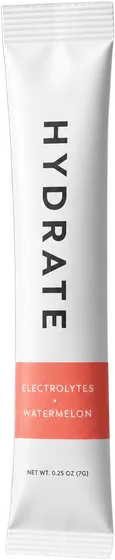
You have a vision for an energy drink mix. Maybe it is a clean-label pre-workout in a stick pack. Maybe it is a sugar free energy drink mix with adaptogens and a passionfruit flavor that nobody else has made yet. Maybe it is an effervescent tablet that fizzes into focus.
Whatever the format, the path from idea to a formula you can actually sell runs through the same set of decisions: which actives, which sweetener system, which acids and flavors, how the powder behaves in the bag, and how cleanly it dissolves in the glass. Get those right and you have a product. Get them wrong and you have a batch of clumping, off-tasting powder that nobody reorders.
Making something like this?
This guide walks you through energy drink mix formulation step by step. It covers dry mixes the drinker adds to water — not canned RTDs. If you are building a canned energy drink, read the canned drink formulation guide first.
Step 1: Decide What Your Product Does for the Person Drinking It
Before you touch a single ingredient, write one sentence about the experience your mix delivers. Not a health claim. An experience.
"A clean lift that kicks in fast and fades without a crash." "Sustained focus for a three-hour work session." "Pre-run energy with electrolytes and nothing artificial."
That sentence governs every formulation decision that follows. It tells you how much caffeine to use, whether you need L-theanine, whether an effervescent format fits, and what your sweetener system should feel like on the palate.
Write it down. Come back to it at every step.
Step 2: Choose Your Caffeine Source
Caffeine is the anchor of almost every energy powder formula. The source changes the experience, the label story, and the cost.
Anhydrous caffeine is the most common. It is a white crystalline powder, highly concentrated, and dissolves cleanly. It is the default for most energy drink stick pack formulas because it is consistent batch to batch and cost-effective. Typical inclusion levels run in a range; the right number for your formula depends on your serving size, your target consumer, and the other actives you are stacking.
Green tea extract (standardized for caffeine) lets you say "naturally sourced caffeine" on the label. It carries a light vegetal note that your flavor system needs to account for. The caffeine percentage varies by supplier and standardization, so the inclusion rate shifts accordingly.
Guarana extract releases caffeine more slowly than anhydrous, which some brands use to support a "no crash" positioning. It has a slightly bitter, earthy flavor. Like green tea extract, the caffeine content varies by grade, so the amount in the formula is not a fixed number.
Yerba mate extract brings caffeine alongside theobromine and other methylxanthines. Brands lean on it for a more complex, "whole-plant" energy story. It has a distinctive flavor that works in some profiles and fights others.
A note on caffeine levels and labeling: the amount of caffeine that goes into your formula, how it appears on the label, and the regulatory category your product sells under (food or dietary supplement) are decisions you make with your chemist reviewer for the specific format and the specific markets where you sell. Rules differ by jurisdiction and they change. A chemist review catches anything that needs adjusting before the formula goes to a manufacturer.
Step 3: Stack Your Supporting Actives
Caffeine alone is a commodity. The actives around it are where your formula earns its positioning.
L-Theanine
Paired with caffeine, L-theanine is associated with a smoother, more focused energy experience. It dissolves well and has almost no flavor impact. Typical ratios to caffeine vary; your chemist will help you find the balance for your specific caffeine level.
B Vitamins (B3, B6, B12)
B vitamins appear in nearly every energy drink powder on the market. They dissolve easily and are stable in dry powder form. B12 is often listed on the front panel for its association with energy metabolism. Inclusion levels are set against the daily values for your target market.
Electrolytes (Sodium, Potassium, Magnesium)
For active or hydration-focused formulas, electrolytes pull double duty: they support the functional story and improve the mouthfeel of the finished drink. Sodium chloride and potassium chloride are the workhorses. Magnesium is trickier — some forms (magnesium oxide) are poorly absorbed and can cause digestive discomfort at higher levels; others (magnesium glycinate, magnesium malate) are better tolerated but cost more.
Adaptogens (Ashwagandha, Rhodiola, Lion's Mane)
Adaptogens are a strong brand differentiator right now. Ashwagandha (as KSM-66 or Sensoril) and rhodiola rosea are the most common in energy mixes. Lion's mane mushroom extract appears in focus-oriented formulas. Each has a flavor profile that your flavor system needs to manage. Standardized extracts give you consistent active levels batch to batch; commodity powders do not.
Amino Acids (L-Citrulline, Beta-Alanine, Taurine)
Pre-workout formulas lean heavily on amino acids. L-citrulline supports blood flow and is associated with endurance. Beta-alanine is well-known for the tingling sensation it produces (paresthesia) at certain doses — a sensation some consumers expect and others find alarming. If your formula includes beta-alanine, your label and marketing should set expectations. Taurine is a staple of mainstream energy formulas and dissolves cleanly.
Pro tip: Every active you add is a flavor variable. Adaptogens and amino acids have strong tastes. Build your active stack first, then develop the flavor system around it — not the other way around.
Step 4: Build Your Sweetener System
The sweetener system is the single biggest driver of how your mix tastes. It also determines whether your product can carry a "sugar free" or "no sugar added" claim.
Sugar-Based Systems
Cane sugar, dextrose, and maltodextrin provide bulk, mouthfeel, and a clean sweetness. They also add calories and carbohydrates. Dextrose dissolves faster than sucrose, which matters for stick packs. Maltodextrin is often used as a carrier for spray-dried flavors and actives rather than as a primary sweetener.
Sugar Free Systems
A sugar free energy drink mix typically combines a high-intensity sweetener with a bulking agent.
Stevia (rebaudioside A or M) is the clean-label standard. Reb A has a slight licorice aftertaste at higher levels; Reb M is cleaner but more expensive. Stevia works best in combination with other sweeteners rather than alone.
Monk fruit extract (luo han guo) has a cleaner sweetness profile than stevia for many palates and no aftertaste. It is more expensive and the supply chain is less diverse.
Sucralose is stable, intensely sweet, and widely used in sports nutrition powders. It blends well with stevia to round out the aftertaste.
Erythritol and allulose are the preferred bulking sweeteners for zero-sugar formulas. Erythritol has a slight cooling effect that works well in mint or citrus profiles. Allulose behaves more like sugar in the mouth and is associated with better mouthfeel, but it has its own regulatory considerations in some markets — confirm with your reviewer.
Pro tip: Taste your sweetener system in water at your target serving concentration before you add any actives or flavors. If the base sweetness is off, nothing downstream fixes it.
Step 5: Add Acid and Flavor in Powder Form
Flavor in a dry mix is more complex than flavor in a liquid. You are working with spray-dried flavor powders, and the acid that makes a citrus or berry profile pop is a dry acid — citric acid, malic acid, or tartaric acid — not a liquid.
Acids
Citric acid is the most common. It is sharp, clean, and dissolves quickly. It also acts as a mild preservative and helps with pH in the reconstituted drink.
Malic acid is softer and more lingering. Apple, watermelon, and tropical profiles often use a citric/malic blend for a more rounded tartness.
Tartaric acid is less common but appears in grape and wine-adjacent flavors.
Acid level affects more than taste. Too much citric acid in a formula with hygroscopic ingredients (like some amino acids or electrolytes) accelerates caking. Your chemist will balance the acid level against the stability of the full formula.
Spray-Dried Flavor Powders
Flavor houses supply spray-dried versions of almost any flavor profile. The carrier matters: maltodextrin-carried flavors are the most common; some are carried on acacia gum or modified starch for cleaner-label positioning. Flavor load (the percentage of flavor powder in the formula) varies by flavor intensity and the taste profile of the actives underneath it.
Pro tip: Order flavor samples from at least two suppliers before committing. The same flavor name from two houses can taste dramatically different in your specific formula.
Step 6: Manage Flow, Caking, and Stability
This is where energy powder ingredients that look great on paper can destroy a batch in real life.
Hygroscopic Ingredients
Many actives and sweeteners absorb moisture from the air. When they do, the powder clumps, cakes, and eventually turns into a solid mass in the bag. Vitamin C (ascorbic acid), some amino acids, and certain sweetener blends are particularly hygroscopic.
How you would notice: The powder stops flowing freely through the stick pack fill head. Sealed samples start to harden within weeks of production. The reconstituted drink has undissolved chunks.
Anti-Caking Agents
Silicon dioxide (silica) and tricalcium phosphate are the standard anti-caking agents in powder beverage formulas. They coat the surface of particles and interrupt moisture absorption. Inclusion levels are low — typically a fraction of a percent — but they make a measurable difference in flowability and shelf life.
Particle Size
Uniform particle size across all ingredients helps with blending consistency and dissolution speed. If some ingredients are very fine and others are coarse, they can separate during shipping (a phenomenon called segregation). A well-formulated energy drink stick pack formula accounts for this by matching particle size ranges or using granulation.
Moisture Barrier Packaging
The best formula in the world cakes in a foil pouch that lets moisture through. Stick pack and sachet materials are specified for moisture vapor transmission rate (MVTR). Your manufacturer handles this, but knowing it exists helps you ask the right questions.
Step 7: Choose Your Format
Tub (Scoop-Dosed Powder)
The tub is the highest-volume format for sports nutrition and energy powders. It allows for larger serving sizes, more actives, and more visual real estate on the label. The scoop introduces dosing variability — consumers do not always level the scoop — which matters for actives with a narrow effective range.
Best for: Pre-workout, high-active-load formulas, gym-channel brands.
Stick Pack
The stick pack is the fastest-growing format in functional beverages. It is portable, single-serve, and signals premium positioning. Fill weights are typically lower than a tub scoop, so the formula needs to deliver its active payload in a smaller mass. Dissolution speed matters more in a stick pack because the consumer is often mixing in a bottle and shaking, not stirring.
Best for: On-the-go energy, DTC brands, influencer-driven launches, travel retail.
Watch for: Stick pack fill heads are sensitive to powder flow. A formula that flows poorly in a tub may jam a stick pack line entirely. Test flowability before you commit to this format with a manufacturer.
Effervescent Tablet
Effervescent tablets use a combination of citric acid and sodium bicarbonate (baking soda) that reacts when it hits water, producing carbonation and a fizzing dissolution. The tablet format is compact, has no scoop, and the fizz is a sensory signal that the product is working.
Formulating for effervescent tablets is more constrained than for powders. Moisture control during manufacturing is critical — if the acid and bicarbonate react before the tablet is sealed, you lose the effervescence entirely. Compression force, binder selection, and packaging are all more tightly specified.
How you would notice a problem: Tablets that fizz weakly or not at all. Tablets that crumble before they hit the water. A flat, chalky taste in the finished drink.
Best for: Travel-friendly positioning, hydration and electrolyte formulas, consumers who find powder mixing inconvenient.
Step 8: Understand Dissolution and Clarity
How fast and how clearly your mix dissolves affects the consumer experience and the return rate.
Dissolution speed is driven by particle size, solubility of individual ingredients, water temperature, and agitation. Most energy mixes are designed to dissolve in cold water with moderate shaking or stirring. Ingredients that dissolve slowly in cold water (some forms of magnesium, certain plant extracts) need to be either reformulated with a more soluble salt form or the label needs to set expectations.
Clarity matters if your brand positions the finished drink as a clean, clear beverage. Some actives (plant extracts, certain amino acids) produce a hazy or cloudy drink. Others leave a slight sediment. Neither is a safety issue, but both affect perception. If clarity is important to your brand, it is a specification your chemist sets early.
Step 9: Get Your Formula Chemist-Reviewed Before It Goes to a Manufacturer
A formula that looks right on a spreadsheet can still have problems a manufacturer will catch on the fill line — or worse, problems a consumer catches after purchase.
A chemist review before production checks:
- Active ingredient levels against current regulatory guidelines for your markets and your product category
- Ingredient interactions that could affect stability or flavor over shelf life
- Label compliance for the format you are selling (food vs. dietary supplement rules differ)
- Dissolution and flowability for the format you have chosen
This is not optional if you plan to sell the product. It is the step that separates a formula that ships from one that sits in a warehouse.
How Genie Fits Into This
Genie is the AI formulator for indie brands. You describe the product you want — the format, the actives, the flavor profile, the positioning — and Genie builds a full formula with exact ingredient percentages and ingredient costs. The formula is yours to explore, adjust, and iterate on for free.
When you are ready to move into production, you start with a refundable deposit. An experienced chemist reviews your formula and prepares the final spec documents your manufacturer works from, back within 5 business days. Genie lines up your manufacturer and gets you their sample pricing before you pay it. You try real samples before you approve any run. Your deposit is refunded in full any time before you approve your run, or if your product cannot be made.
If you already have a manufacturer relationship, you can get the manufacturing-ready documents instead — your chemist-reviewed formula with everything a manufacturer needs, saved to your account within 5 business days.
One deposit covers up to 6 products of the same type from your brand. The others start production with no deposit of their own, and your deposit stays with the product you paid it on.
See Genie's pricing for the numbers.
Frequently Asked Questions
What is the difference between a food and a dietary supplement for an energy drink mix?
The regulatory category determines what claims you can make, how the label is structured, and which ingredient limits apply. Energy drink mixes are sold under both categories depending on the market and the brand's positioning. The right category for your product is a decision you make with your chemist reviewer, because the rules differ by jurisdiction and change over time.
How do I keep my energy powder from clumping in the bag?
The main tools are anti-caking agents (silicon dioxide is the standard), moisture barrier packaging with a low moisture vapor transmission rate, and careful selection of ingredient forms. Hygroscopic ingredients like vitamin C and some amino acids are the most common culprits. A chemist can identify which ingredients in your specific formula are the risk points and adjust accordingly.
Can I use natural caffeine instead of anhydrous caffeine?
Yes. Green tea extract, guarana extract, and yerba mate extract are all common natural caffeine sources in energy powder formulas. The trade-off is flavor impact (each has its own taste that your flavor system needs to manage) and variability in caffeine content by grade and supplier, which means the inclusion rate in your formula shifts depending on the source you use.
What makes a stick pack formula different from a tub formula?
The fill weight is lower, so every active has to deliver in a smaller mass. Dissolution speed matters more because consumers are typically shaking in a bottle rather than stirring in a glass. And powder flowability is more critical — a formula that flows acceptably in a tub can jam a stick pack fill head entirely. These constraints are worth knowing before you finalize your format.
How do effervescent tablets work and are they harder to formulate?
Effervescent tablets use citric acid and sodium bicarbonate that react on contact with water, producing carbonation and a rapid dissolve. They are more constrained to formulate than loose powders because moisture control during manufacturing is critical — if the acid and bicarbonate react before the tablet is sealed, you lose the fizz. Compression, binder selection, and packaging are all more tightly specified than for a powder.
Do I need to list the caffeine amount on the label?
How caffeine is declared on the label depends on the regulatory category of your product (food or dietary supplement), the jurisdiction where you sell, and the format. Your chemist reviewer checks the current rules for your specific product and markets. This is not a decision to make from a blog post — it is one of the things a chemist review is for.
Key Takeaways
- Start with the experience you are selling, not the ingredient list. Every formulation decision flows from that one sentence.
- Your caffeine source (anhydrous, green tea, guarana, yerba mate) changes the label story, the flavor challenge, and the cost. There is no single right answer.
- The sweetener system is the biggest driver of taste. Build it first, taste it in water, then layer actives and flavor on top.
- Caking and poor dissolution kill reorder rates. Anti-caking agents, moisture barrier packaging, and the right ingredient forms are not optional.
- Stick packs are the fastest-growing format but the least forgiving of flowability problems. Test before you commit.
- Effervescent tablets require tighter manufacturing controls than loose powder. If fizz is core to your brand, budget for a more constrained development process.
- A chemist review before production is what separates a formula that ships from one that creates problems downstream.