Product Development · 10 min read
How Long a Line Extension Really Takes: Brief to Shelf, Step by Step
Genie Team · Updated Nov 5, 2026
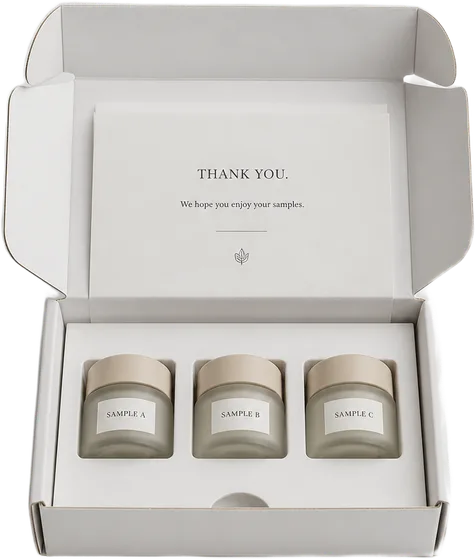
You already have a product that sells. You know your customer, you have a manufacturer relationship, and you have a sales channel that works. Now you want to add the next SKU.
The optimism is real: it feels like the hard part is behind you. But a line extension has its own timeline, and if you plan it the way most founders do, you will be surprised by how long brief to shelf actually takes. The good news is that the timeline is not fixed. Knowing which stages compress and which do not is what separates a brand that ships on schedule from one that misses its launch window by a quarter.
Making something like this?
This guide walks every stage from concept to first run, with realistic week ranges and the variables that move them.
The Full Picture Before You Zoom In
A realistic line extension timeline runs somewhere between 24 and 52 weeks, depending on category, complexity, and how many things run in parallel. Simpler extensions on established bases can land closer to the short end. Novel formulas, new categories, or products that require clinical testing will stretch toward the long end or beyond it.
Here is the sequence at a glance:
- Concept and brief (2–4 weeks)
- Formula development (4–10 weeks)
- Initial sampling (4–8 weeks)
- Stability and safety testing (8–16 weeks)
- Regulatory and compliance review (2–6 weeks, runs alongside testing)
- Packaging development and procurement (8–16 weeks, starts early)
- First production run (4–10 weeks)
Several of these stages overlap. Where they can, we will say so.
Stage 1: Concept and Brief
Typical range: 2–4 weeks
The brief is the document that aligns everyone before money moves. It answers: what does this product do, who is it for, what are the non-negotiables on format and ingredients, what is the target cost, and when does it need to be on shelf?
A tight brief is the single biggest time-saver in the whole process. A vague one costs you weeks of back-and-forth at every downstream stage.
What stretches this stage:
- Internal alignment across founders, marketing, and retail partners
- Undefined cost targets or MOQ constraints
- No decision on whether to use your existing manufacturer or find a new one
What shortens it:
- A clear customer insight driving the extension (not just "the category is growing")
- Whitespace research done before the brief is written
- One decision-maker with final authority
Pro tip: Before you write the brief, spend time with your existing customer data. Your best-selling SKU's reviews, DMs, and retail reorder patterns will tell you what the next product should solve. That research pays for itself in brief clarity.
Stage 2: Formula Development
Typical range: 4–10 weeks
This is where a chemist or formulation team translates your brief into an actual formula: specific ingredients, percentages, processing instructions, and a preliminary cost per unit.
For a brand with an existing product, there are two common paths. The first is a line extension that shares a base with something you already make, which compresses development significantly. The second is a genuinely new formula in an adjacent category, which takes longer and introduces more unknowns.
What stretches this stage:
- Novel actives with limited formulation precedent
- Strict "free from" requirements that limit the ingredient palette
- A new category (moving from a leave-on serum to a rinse-off cleanser, for example)
- Sourcing constraints on key actives
What shortens it:
- Extending an existing base with a new active or fragrance
- A clear ingredient list in the brief
- Access to a large ingredient database with cost and chemistry data already mapped
Pro tip: Ask your formulator to flag any ingredient with a lead time longer than eight weeks during development, not after. Long-lead actives are a silent schedule killer.
Stage 3: Initial Sampling
Typical range: 4–8 weeks
Once a formula is approved on paper, your manufacturer produces bench samples or pilot-scale samples for you to evaluate. You are checking texture, color, scent, application, and whether the formula performs the way the brief described.
Expect at least two rounds. The first round rarely ships exactly right. The second round addresses your feedback. Occasionally there is a third.
What stretches this stage:
- Manufacturer queue times (especially at larger CMs with many clients)
- Detailed sensory feedback that requires reformulation, not just adjustment
- Fragrance or color matching across a range
- International shipping if your CM is overseas
What shortens it:
- Detailed, written feedback after each round (not just "make it feel lighter")
- A manufacturer with a short sample queue and responsive account management
- Limiting revision scope to one or two variables per round
Stages 2 and 3 can partially overlap. Some manufacturers will begin ordering long-lead ingredients while formula revisions are still in progress, which saves two to four weeks.
Pro tip: Evaluate samples blind alongside your existing product. Your customers will compare them on shelf. You should compare them the same way.
Stage 4: Stability and Safety Testing
Typical range: 8–16 weeks
This is the stage that surprises founders most, because it cannot be rushed.
Stability testing confirms that your formula holds up over time: that it does not separate, change color, grow microbes, or degrade in efficacy under real-world storage conditions. Accelerated stability testing (typically at elevated temperature and humidity) takes a minimum of eight to twelve weeks. Real-time stability for a product with a 24-month shelf life claim takes longer.
Safety assessment requirements vary by market. In the EU, a Cosmetic Product Safety Report (CPSR) from a qualified safety assessor is mandatory before you can sell. In the US, the requirements under MoCRA (the Modernization of Cosmetics Regulation Act) have continued to evolve through 2026 and include facility registration, serious adverse event reporting, and safety substantiation. Always work with a regulatory consultant who is current on the rules in every market you intend to sell.
What stretches this stage:
- Formula changes after stability has started (it restarts the clock)
- Multiple market submissions with different dossier requirements
- Products with SPF, drug claims, or ingestible components, which trigger additional testing
- Lab backlogs, which are common in Q3 and Q4
What shortens it:
- Sending samples to the stability lab immediately after your first acceptable sample round, before final formula lock
- Using a lab that runs accelerated and real-time protocols simultaneously
- Choosing a formula with a proven stability profile (fewer novel actives)
This stage runs alongside Stage 5 and can overlap with late packaging development.
Stage 5: Regulatory and Compliance Review
Typical range: 2–6 weeks, running alongside testing
Regulatory review covers labeling compliance, ingredient INCI naming, claim substantiation, and any market-specific documentation. For a brand already selling, you likely have a regulatory consultant or process in place. The question is whether your new SKU introduces anything that changes the picture: a new claim, a new active, a new market, or a new product type.
What stretches this stage:
- New claims that require substantiation ("clinically proven," "reduces wrinkles by X%")
- Entering a new market for the first time
- Products that sit at the drug-cosmetic boundary (sunscreen, anti-dandruff, acne)
- Delays in receiving safety assessment documentation from your lab
What shortens it:
- A conservative claim strategy aligned to what your formula actually does
- A regulatory consultant engaged before the brief is finalized, not after
- Reusing compliant label architecture from your existing line
Pro tip: The label is a legal document. Treat it that way from the first draft, not the last.
Stage 6: Packaging Development and Procurement
Typical range: 8–16 weeks, starts as early as Stage 2
Packaging is the stage most brands start too late. Lead times on custom components, whether a custom bottle, a decorated cap, or a printed carton, run eight to fourteen weeks from order to delivery. Stock components are faster, but even those require decoration and assembly time.
For a line extension, you are likely staying within your existing visual system, which removes some design time. But if you are introducing a new format (moving from a pump to a dropper, for example), compatibility testing with the formula adds time.
What packaging costs: Custom primary packaging (bottles, jars, tubes) typically runs higher per unit at lower MOQs, with industry ranges for decorated components starting in the low thousands of dollars for tooling on fully custom pieces and dropping significantly at scale. Stock components with custom labels are meaningfully cheaper and faster. Folding cartons and labels are usually quoted by the printer based on size, finish, and quantity.
What stretches this stage:
- Custom tooling for a new component shape
- Multi-component structures (pump, bottle, outer carton, insert)
- Overseas component sourcing with port and freight variability
- Color matching across a range
What shortens it:
- Staying within your existing component family
- Locking dielines and artwork before samples are finalized
- Running packaging development in parallel with stability testing
Pro tip: Order packaging components as soon as the formula and fill weight are confirmed. Waiting for final formula approval before ordering packaging is the most common cause of a delayed launch.
Stage 7: First Production Run
Typical range: 4–10 weeks from purchase order to finished goods
You have a stable, compliant formula. You have approved packaging. Now you place a production order.
For brands with an existing manufacturer relationship, this stage is the most predictable. Your CM knows your brand, your quality standards, and your fill specs. The main variable is queue time.
For a new CM, add two to four weeks for onboarding, quality agreements, and a first-article inspection.
What stretches this stage:
- Manufacturer queue (Q4 is the most congested period industry-wide)
- Ingredient sourcing delays at the CM level
- Quality holds on bulk or packaging components
- Larger run sizes that require longer fill time
What shortens it:
- An existing manufacturer relationship with a current quality agreement
- Advance notice to your CM during the stability phase, so they can hold queue time
- Clean, complete documentation handed off at purchase order
Typical first-run costs for a cosmetic or personal care product depend heavily on MOQ, formula complexity, and fill format. Industry ranges for contract manufacturing run from a few dollars per unit at scale to significantly higher at lower minimums, with MOQs typically starting between 1,000 and 5,000 units depending on the manufacturer and category.
What Running in Parallel Actually Looks Like
The brands that hit the short end of the timeline are not moving faster through each stage. They are running more stages at the same time.
Here is a realistic parallel-track schedule for a straightforward line extension:
- Weeks 1–4: Brief and concept
- Weeks 3–10: Formula development
- Weeks 8–16: Sampling (rounds 1 and 2)
- Weeks 10–18: Stability testing begins on first acceptable sample
- Weeks 10–20: Packaging development and component ordering
- Weeks 12–18: Regulatory review runs alongside testing
- Weeks 20–30: First production run, once stability and compliance are confirmed
That schedule gets a simple extension to shelf in roughly 28–32 weeks. More complex products, new categories, or new markets add time at multiple stages.
Where Genie Fits
If your team is small and your time is split between running the brand and building the next product, the research and formulation stages are usually where the schedule slips. Genie researches the whitespace for your next SKU, develops the formula with a chemist's review, and works with your existing manufacturer or lines one up if you need a new partner for a pilot run. It is not a replacement for your regulatory consultant or your CM relationship. It is how you get from brief to a production-ready formula without adding headcount.
Frequently Asked Questions
How long does a line extension typically take from start to shelf?
A realistic range is 24 to 52 weeks, depending on formula complexity, category, testing requirements, and how many stages run in parallel. Simple extensions on an existing base with a current manufacturer can land closer to 24 weeks. Novel formulas, new categories, or new markets stretch the timeline significantly.
What is the longest stage in a cosmetic product development timeline?
Stability testing is usually the longest stage that cannot be compressed. Accelerated stability protocols take a minimum of eight to twelve weeks, and any formula change after testing begins restarts the clock. Starting stability as early as possible, on the first acceptable sample, is the most reliable way to protect your schedule.
Can packaging development run at the same time as formula development?
Yes, and it should. Packaging lead times for custom components run eight to fourteen weeks from order. If you wait for a final formula before starting packaging, you add two to three months to your timeline unnecessarily. Lock the format and fill weight as early as possible and begin packaging development immediately.
What stretches a new SKU launch timeline the most?
The three most common causes of a delayed launch are: formula changes after stability testing has started, packaging ordered too late, and manufacturer queue time not reserved in advance. All three are avoidable with earlier planning.
Does having an existing manufacturer speed things up?
Significantly. An existing CM relationship removes onboarding time, quality agreement negotiation, and first-article unknowns. It also means you can informally reserve queue time during your stability phase, which is not possible with a new partner. If you are considering a new CM for a line extension, build an extra four to six weeks into your schedule.
How much does it cost to develop a line extension?
Costs vary widely by category, formula complexity, and run size. Development lab fees for a new formula typically run from a few thousand dollars to over ten thousand, depending on the number of iterations and the lab's structure. Stability and safety testing adds to that. Packaging costs depend on whether you are using stock or custom components. First-run manufacturing costs depend on MOQ and fill format. Budget the full range before you commit to a launch date.
Key Takeaways
- A realistic line extension timeline runs 24 to 52 weeks. Plan for the middle of that range and build in buffer.
- Stability testing is the one stage you cannot compress. Start it on your first acceptable sample, not after final formula lock.
- Packaging has the longest procurement lead time of any stage you control. Order components as soon as fill weight and format are confirmed.
- The brands that hit short timelines run stages in parallel, not sequentially.
- A vague brief costs you more time than any other single mistake. Align on cost, format, and claims before formulation begins.
- Reserve your manufacturer's queue time during the stability phase. Do not wait for a purchase order to have that conversation.