Product Development · 10 min read
AI for Home Care Formulation: Cleaners, Detergents, and What Still Needs a Chemist
Genie Team · Updated Nov 21, 2026
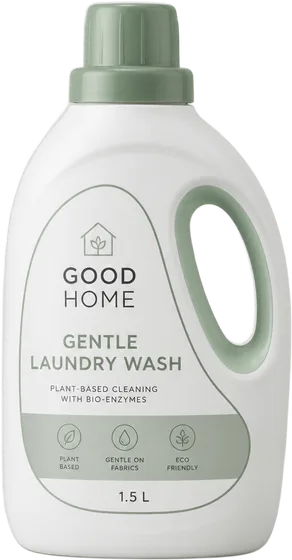
You have the brand. You have the gap in the market — maybe it's a plastic-free laundry detergent, a concentrated all-purpose cleaner in a refill pouch, or a dish soap that actually smells like something worth keeping on the counter. The idea is sharp. The formula is the hard part.
Home care is one of the most technically demanding categories in consumer products. The chemistry is real, the regulatory landscape has teeth, and a formula that works beautifully on one surface can wreck another. But the barrier to entry has shifted. AI for cleaning product formulation is now a legitimate starting point, not a shortcut that skips the science.
Making something like this?
This post walks through what AI can decide, what a chemist still owns, and how the two work together to get a home care product from idea to a bottle you can ship. This is general information, not legal or regulatory advice. For anything touching compliance, safety data, or label claims, work with a qualified chemist and a lawyer.
Why Home Care Formulation Is Its Own World
Skincare and food get most of the indie brand attention, but home care is quietly one of the most interesting categories to build in right now. Consumers are reading ingredient labels on dish soap the same way they read them on moisturizer. Refill formats, concentrate drops, and plastic-free bars are reshaping what a cleaning product even looks like on shelf.
The chemistry underneath all of that is more complex than it appears. A cleaning product works by solving a physics problem: getting water, which naturally beads up and rolls off, to spread across a greasy surface, lift the soil, and rinse away cleanly. That requires a surfactant system. Then you need builders and chelators to handle hard water. A preservative to keep microbial growth out of a water-based formula. A pH that's aggressive enough to clean but safe for the surface and the person using it. A fragrance load that survives the formula's alkalinity. And packaging that doesn't react with what's inside.
Get any one of those wrong and the product either doesn't work, degrades on the shelf, damages surfaces, or fails a safety review.
What AI Can Actually Decide
The honest answer is: a lot of the structural work.
The Surfactant System
Surfactants are the backbone of almost every cleaning product. They lower surface tension, emulsify grease, and carry soil away in the rinse. Choosing the right combination — anionic, nonionic, amphoteric, or cationic, depending on the application — determines cleaning performance, foam profile, skin feel, and biodegradability.
AI formulation tools can model surfactant combinations against your target application. A hand dish soap needs different foam behavior and skin compatibility than a laundry detergent or a hard surface spray. A concentrate needs a system that performs at dilution. An AI working from a large ingredient database can propose a surfactant system tuned to those requirements, including cost per bottle at your target volume.
Builders and Chelators
Hard water is the enemy of cleaning performance. Calcium and magnesium ions in tap water bind to surfactants and reduce their effectiveness. Builders and chelators tie up those ions before they cause problems. Choosing between options like citric acid, EDTA alternatives, or gluconates involves trade-offs between performance, cost, biodegradability, and the pH the rest of your formula needs to hold. AI can model those trade-offs against your brief.
pH Design
Cleaning products live across a wide pH range. Alkaline formulas cut grease and protein soils. Acidic formulas dissolve mineral deposits and soap scum. Neutral formulas are gentler on surfaces and skin. The pH you target shapes every other decision in the formula: which surfactants are stable, which preservatives work, which fragrances survive, and what you can and cannot claim on the label.
AI can propose a pH target for your application and build the buffering system to hold it. What it cannot do is confirm how that pH interacts with the specific surface materials your customer will use the product on. That's a chemist's call.
Fragrance Load
Fragrance in a cleaning product isn't decoration. It signals cleanliness, drives repeat purchase, and is one of the main ways a brand differentiates on shelf. But fragrance in an alkaline formula behaves differently than fragrance in a neutral one. Some aromatic compounds degrade at high pH. Some interact with surfactants and cause cloudiness or separation.
AI can calculate a starting fragrance load for your formula's pH and surfactant system, and flag fragrance families that are more or less stable in that environment. A perfumer or your chemist confirms the final selection.
Format: Concentrate, Refill, Bar, or RTU
One of the highest-value decisions in home care right now is format. A ready-to-use spray is convenient but expensive to ship and heavy on plastic. A concentrate drop or tablet dramatically reduces packaging and shipping weight. A solid bar eliminates water from the formula entirely.
Each format requires a different formulation approach. AI can model the same cleaning brief across formats, compare cost per use, and help you decide which format fits your brand positioning and your margin math before you commit to a direction.
What a Chemist Still Owns
AI gets you to a serious, buildable formula faster than any previous process. It does not replace the expertise that keeps a formula safe, stable, and manufacturable. Here is where a chemist is non-negotiable.
Surface and Material Compatibility
A formula that cleans beautifully on sealed granite can etch marble, bleach colored grout, or cloud acrylic. A laundry detergent that performs on cotton may damage elastane or wool. Your chemist maps the formula's pH, surfactant system, and any active ingredients against the surfaces and materials your customer will actually use it on. This is not something you can skip if you're making label claims about surface compatibility.
Preservative Selection and Efficacy
Any water-based cleaning product is a potential growth medium for bacteria, yeast, and mold. The preservative system has to work at your formula's pH, be compatible with your surfactants, and hold up through the product's intended shelf life. Preservative efficacy testing (sometimes called challenge testing) is the only way to confirm this. Your chemist selects the preservative system and specifies the testing protocol. AI can flag options; a chemist confirms the choice and the test.
Stability Testing
A formula that looks perfect on day one can separate, discolor, cloud, or lose performance over time. Stability testing puts the formula through temperature cycling and time to predict shelf life. Your chemist designs the stability protocol and interprets the results. This is also where packaging compatibility is confirmed — some plastic resins absorb surfactants or react with alkaline formulas over time.
The Safety Data Sheet
A Safety Data Sheet (SDS) is a legally required document for cleaning products. It covers hazard classification, safe handling, first aid measures, storage, and disposal. It has to be accurate, formatted to the correct standard, and kept current. Your chemist or a regulatory specialist prepares it. This is not a document to generate and forget.
A Note on Disinfecting and Sanitizing Claims
If you want to claim that your product kills germs, disinfects, or sanitizes, that claim makes your product a pesticide under US EPA rules, and it must be registered before you can make that claim. This is a significant regulatory undertaking, separate from standard cleaning product development. Most indie brands launching in home care build around cleaning performance claims rather than antimicrobial ones. Your lawyer and chemist can walk you through where the line is for your specific product.
How the AI-to-Chemist Handoff Works on Genie
Genie is the AI formulator for indie brands, and home care is one of the categories it covers. The process is designed around the reality that AI and chemistry expertise are not competing approaches — they're sequential ones.
You start by describing your product: the application, the format, the performance brief, the fragrance direction, any ingredient preferences or restrictions. Genie builds a formula from a database of over 180,000 ingredients with full chemistry data. Every ingredient and every percentage is visible from the start, so you can see exactly what you're working with before you pay anything. Starting is free.
Once the formula is where you want it, a real chemist reviews it and prepares the manufacturing-ready documents a contract manufacturer needs, within five business days. Those documents are yours to take to any manufacturer. Genie develops the formula; a contract manufacturer produces it. You choose who makes the product.
For home care specifically, the chemist review is where surface compatibility, preservative selection, and SDS preparation get addressed. It's the step that takes a formula from a strong AI-generated starting point to something a manufacturer can actually quote and produce.
For details on what the review costs and how the rest of the payment flow works, the Genie pricing page has everything.
Laundry Detergent Formulation: A Closer Look
Laundry is one of the most competitive subcategories in home care, and also one of the most interesting to build in right now. The format innovation alone — sheets, strips, pods, concentrate liquids, powder — means there's genuine whitespace for a brand with a clear point of view.
Laundry detergent formulation involves a few decisions that are worth understanding before you start.
Enzyme selection. Modern laundry detergents use enzymes to break down specific soil types: proteases for protein stains, amylases for starch, lipases for fat, cellulases for fabric care. The enzyme blend you choose shapes the performance story you can tell. Enzymes also have stability requirements that affect your formula's pH and preservative choices.
Water hardness performance. A detergent that works in soft water may perform poorly in hard water markets. Your chelator and builder system needs to account for the range of water hardness your customer is likely to encounter.
Fabric compatibility. A detergent for everyday cotton loads is formulated differently than one positioned for activewear, wool, or delicates. pH, surfactant selection, and enzyme choices all shift depending on the fabric brief.
Format economics. A liquid laundry detergent is heavy and expensive to ship direct-to-consumer. A concentrated strip or sheet solves that problem but requires a completely different formulation approach — no water, different binders, different actuation chemistry. The format decision has real implications for your unit economics and your retail channel strategy.
AI can model these variables and help you find a formulation direction before you've spent anything on lab time. The chemist review then confirms enzyme stability, fabric compatibility, and the safety documentation.
Retailer and Regulatory Standards
If you're planning to sell through retail, many major retailers have their own ingredient standards for home care products, separate from federal requirements. These typically restrict or limit certain surfactant families, preservatives, or fragrance ingredients. The specific lists and thresholds change, so the right approach is to check the current standard directly with the retailer, or have your chemist do it as part of the review process.
At the federal level in the US, the EPA and the Consumer Product Safety Commission both have jurisdiction over aspects of cleaning product safety and labeling, depending on the product type and any claims you make. Some states, California being the most prominent example, have their own ingredient disclosure and restriction rules for cleaning products. Your chemist and your lawyer are the right people to map the current requirements for your specific product and your target markets.
The general principle: build the formula first, then map the compliance picture with qualified professionals before you finalize the label.
Frequently Asked Questions
Can AI really formulate a cleaning product from scratch?
AI can build a structurally sound formula — surfactant system, builders, chelators, pH, fragrance load — based on your application brief and ingredient preferences. What it produces is a serious starting point with full ingredient transparency, not a finished product. A chemist review is still required to confirm surface compatibility, preservative efficacy, stability, and the safety data sheet before manufacturing.
What's the difference between a cleaning product and a disinfectant, legally?
In the US, a product that claims to kill germs, disinfect, or sanitize is regulated as a pesticide by the EPA and must be registered before those claims can be made. A cleaning product that removes soil and dirt without making antimicrobial claims sits under a different regulatory framework. Most indie brands launching in home care build around cleaning performance rather than antimicrobial claims. A lawyer familiar with EPA registration can walk you through the specifics for your product.
How do I know if my formula is stable enough to sell?
Stability testing is the answer. A chemist designs a protocol that puts your formula through temperature cycling and time to predict real-world shelf life. This also confirms that your packaging material doesn't interact with the formula over time. Stability testing is not something AI can replace — it requires physical samples and a qualified person to interpret the results.
What does laundry detergent formulation actually cost to develop?
The cost of developing a laundry detergent formula through Genie starts free for the formulation itself. The chemist review, which produces the manufacturing-ready documents a manufacturer needs, has a cost listed on the Genie pricing page. Beyond that, you're looking at a manufacturer's sample cost, their minimum order quantity, and testing costs — all of which vary by manufacturer and volume. Industry ranges for contract manufacturing minimums in home care typically run from a few hundred to a few thousand units depending on format and complexity.
Do I need a Safety Data Sheet for every cleaning product?
Yes, if you're selling a cleaning product commercially in the US. An SDS is a legally required document that covers hazard classification, safe handling, storage, and disposal. It must be accurate, formatted to the correct standard (the US follows the Globally Harmonized System), and kept current. Your chemist or a regulatory specialist prepares it — it's not a document to auto-generate without expert review.
Can I launch a home care product without a background in chemistry?
Yes, and many successful indie home care brands were built by founders with no chemistry background. The key is knowing which decisions AI can support (formula structure, format, cost modeling) and which ones require qualified expertise (preservative selection, stability testing, SDS preparation, regulatory compliance). The two work together. You don't need to know the chemistry yourself — you need to know when to bring in someone who does.
Key Takeaways
- Home care formulation involves real chemistry: surfactant systems, builders, chelators, pH design, preservatives, and packaging compatibility all interact.
- AI for cleaning product formulation can model the structural decisions — surfactant system, format, fragrance load, cost per bottle — faster and more transparently than traditional lab briefing.
- A chemist is non-negotiable for surface and material compatibility, preservative efficacy testing, stability testing, and the Safety Data Sheet.
- Disinfecting and sanitizing claims make a product a pesticide under US EPA rules and require registration. Build your performance story around cleaning, not antimicrobial action, unless you've done the regulatory work.
- Retailer ingredient standards and state-level rules (California in particular) change. Check current requirements with the retailer, a chemist, or a lawyer before finalizing your label.
- Laundry detergent formulation is especially format-sensitive. Liquid, strip, sheet, and pod formats each require a different formulation approach with different unit economics.
- Genie develops the formula and connects you with a chemist review. A contract manufacturer produces the product. You choose who makes it.