Formulation Science · 12 min read
How to Formulate a Facial Cleanser: Gel, Cream, Oil, or Balm
Genie Team · Updated Oct 30, 2026
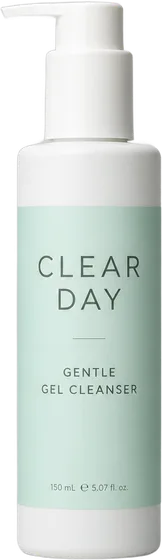
You already know what kind of cleanser you want to make. Maybe it's a milky gel that rinses clean without that tight, stripped feeling. Maybe it's a rich cleansing balm that melts off SPF and makeup like it was never there. The format is clear in your head. What's less clear is how to get from that vision to a real formula with real ingredients in the right amounts.
This guide walks you through face wash formulation for all four major formats: gel, cream, oil, and balm. Each one has its own chemistry, its own failure modes, and its own set of decisions that will make or break the finished product.
Making something like this?
Why the Format You Choose Changes Everything
A facial cleanser's format isn't just a texture preference. It determines which ingredients you can use, how the product behaves on skin, how it's preserved, and what your customer's experience will be from the first pump to the last rinse.
Gel cleansers are water-based and surfactant-driven. Cream cleansers sit between a rinse-off emulsion and a gentle wash. Oil cleansers are anhydrous (no water) or emulsifying. Cleansing balms are solid or semi-solid anhydrous systems that emulsify on contact with water. Each format starts from a different base chemistry, and that shapes every ingredient decision you make after it.
Before you pick your first ingredient, answer these three questions:
- What skin type is this for? Oily skin tolerates more surfactant. Dry and sensitive skin needs a gentler, more emollient approach.
- Does it need to remove makeup and SPF, or is it a second-cleanse, morning-wash product?
- What rinse behavior do you want? A clean rinse with no residue, or a slight slip that leaves skin feeling conditioned?
Your answers will steer you toward the right format and the right ingredients inside it.
Step 1: Understand the Core Chemistry Before You Touch an Ingredient
Every cleanser works by reducing the surface tension between skin (and what's on it) and water, so that oils, debris, and residue can be rinsed away. How aggressively it does that is the central design question.
Surfactants are the workhorses of water-based cleansers. They have a water-loving head and an oil-loving tail, which lets them grab onto sebum and rinse it off. The key variables are:
- Charge type. Anionic surfactants (like sodium lauryl sulfate) are powerful cleansers but can be harsh. Amphoteric surfactants (like cocamidopropyl betaine) are gentler and reduce irritation when used alongside anionics. Non-ionic surfactants are mild and often used in cream and oil-cleansing systems.
- HLB value. The hydrophilic-lipophilic balance of a surfactant tells you how it will behave in your formula. High HLB surfactants emulsify oil into water. Low HLB surfactants do the reverse. This matters enormously for oil cleansers and balms.
- Concentration. More surfactant is not always better. Overloading a formula strips the skin barrier and causes long-term sensitivity. The right level depends on the surfactant grade, the supplier's specification, and the other ingredients around it.
Emollients and oils condition the skin and, in oil-based formats, do the primary cleansing work. In gel and cream cleansers they soften the formula and offset surfactant harshness.
Emulsifiers are critical in cream cleansers and cleansing balms. They hold water and oil together (cream) or allow a solid oil system to emulsify on contact with water (balm).
Preservatives protect water-containing formulas from microbial growth. Anhydrous formulas (pure oil cleansers, balms) don't require a traditional preservative, but they do need antioxidants to prevent rancidity.
Step 2: Choose Your Format and Build the Framework
Gel Cleanser Formulation
A gel cleanser is typically 70–85% water, with surfactants doing the cleansing work and a polymer or gum providing the gel texture.
The framework:
- Water phase: Deionized water, 65–80% (the range shifts based on how concentrated your actives and surfactants are)
- Primary surfactant: Sodium cocoyl isethionate, sodium lauryl glucose carboxylate, or a mild sulfate-free anionic, typically 5–15% (the grade and supplier spec will tell you the active content, which moves this number significantly)
- Secondary surfactant: Cocamidopropyl betaine or a similar amphoteric, typically 2–8% (it softens the foam and reduces irritation from the primary)
- Thickener/gelling agent: Carbomer, hydroxyethylcellulose, or a natural gum like xanthan, typically 0.3–2% (the grade determines how much you need; too much gives a stringy, unpleasant texture)
- Humectant: Glycerin or sodium PCA, typically 2–5% (adds slip and helps skin retain moisture after rinsing)
- Preservative system: Phenoxyethanol with a co-preservative, or an alternative system suited to your pH; concentration depends on the system chosen
- pH adjustment: Citric acid or sodium hydroxide solution to bring the finished formula to pH 4.5–6.0, which is skin-compatible and supports preservative efficacy
Pro tip: Carbomer gels must be neutralized to thicken. If your gel stays thin and watery after mixing, check whether you've added your neutralizer. If it's lumpy, you dispersed the carbomer in water that was too warm, or you added it too fast.
Watch for this failure: A gel cleanser that separates or turns watery on the shelf has either an incompatible preservative disrupting the polymer network, or a pH that drifted out of range. Check pH at manufacture and again at 4 and 8 weeks.
Cream Cleanser Formulation
A cream cleanser is an emulsion, usually oil-in-water, with a lower surfactant load than a gel and a higher emollient content. It rinses off but leaves skin feeling softer.
The framework:
- Water phase: Deionized water, 55–75%
- Emulsifier: A non-ionic emulsifier or emulsifier blend with an HLB appropriate for your oil phase, typically 2–6% (the right HLB depends on the specific oils you're using; your supplier's HLB tables are the reference)
- Oil phase: A blend of emollients — something lightweight like caprylic/capric triglyceride plus something more skin-identical like squalane, total oil phase typically 10–25%
- Mild surfactant: A non-ionic or amphoteric surfactant for gentle cleansing action, typically 2–8%
- Humectant: Glycerin or hyaluronic acid, 2–5%
- Thickener (optional): Cetyl alcohol or a natural wax can add body to the cream
- Preservative system: Required; choose one compatible with your emulsifier and pH
- pH: 5.0–6.5 for most cream systems
Pro tip: Add your surfactant to the water phase after the emulsion has formed. Adding it too early can interfere with emulsification and give you a broken, greasy product.
Watch for this failure: A cream cleanser that looks fine at manufacture but shows oil rings or water pooling at 6 weeks has a broken emulsion. This usually means the emulsifier concentration was too low, the HLB was wrong for the oil phase, or the two phases were combined at mismatched temperatures. Both phases should be at 70–75°C when you combine them.
Oil Cleanser Formulation
An oil cleanser is anhydrous or near-anhydrous. It works on the principle that like dissolves like: the oils in the formula dissolve the oils, SPF filters, and pigments on skin. The emulsifying version rinses clean with water; the non-emulsifying version is wiped off.
The framework (emulsifying oil cleanser):
- Carrier oils: A blend of skin-friendly oils — something light like jojoba or squalane plus something richer like sunflower or sweet almond, total 60–85%
- Emulsifier: A low-HLB self-emulsifying wax or PEG-free emulsifier that allows the oil to emulsify on contact with water, typically 10–20% (this is the ingredient that determines rinse behavior; too little and the oil won't rinse clean)
- Skin-feel modifier: Cyclomethicone or a plant-based silicone alternative can improve slip; optional
- Antioxidant: Vitamin E (tocopherol) at 0.1–1% to prevent oil rancidity
- Fragrance or essential oil (optional): If used, concentration and safety limits apply; a chemist review confirms the safe use level
Pro tip: The emulsifier selection is the most consequential decision in an oil cleanser formula. Test rinse behavior on your own skin before committing to a batch. If the product leaves a greasy film after rinsing, the emulsifier level is too low or the HLB is mismatched to your oil blend.
Watch for this failure: Oil oxidation. If your finished product smells rancid, off, or crayon-like after a few months, the antioxidant level was insufficient or the carrier oils you chose have a short shelf life. High-linoleic oils like rosehip and hemp seed are the most vulnerable. Shelf-life testing with a peroxide value measurement will catch this before your customer does.
Cleansing Balm Formulation
A cleansing balm is a solid or semi-solid anhydrous formula that melts on contact with skin warmth, then emulsifies when water is added and rinses clean. It's the most effective makeup-removal format and one of the most satisfying textures in skincare.
The framework:
- Wax component: A blend of waxes sets the texture. Beeswax, candelilla wax, or rice bran wax are common choices. Total wax phase, 5–20% (the ratio of hard to soft waxes determines whether your balm is firm in the jar or scoopable; climate matters here, since a balm that's perfect in a temperate warehouse may be too soft in a hot climate)
- Butter component: Shea butter, mango butter, or kokum butter adds richness and modifies melt point, typically 10–30%
- Carrier oils: As in an oil cleanser, 30–55%
- Emulsifier: A self-emulsifying wax that allows the melted balm to rinse off, typically 10–20%
- Antioxidant: Tocopherol, 0.1–1%
- Fragrance or essential oil (optional): Safe-use level confirmed at chemist review
Pro tip: Pour temperature is critical. If you pour too hot, the wax components can separate as they cool, giving you a grainy or streaky texture. Pour just as the mixture begins to thicken, around 45–50°C for most formulas, and don't disturb it while it sets.
Watch for this failure: Graininess in the finished balm, particularly with shea butter. This happens when the formula is cooled too slowly or reheated after setting. Once shea butter recrystallizes in an unstable polymorph, the graininess is permanent. Cool your balm quickly and evenly.
Step 3: Select and Vet Your Ingredients
Every ingredient in your formula needs to be evaluated on four criteria before it goes in:
- Function. What is it doing in the formula? If you can't answer that, it doesn't belong.
- Concentration range. What range does the supplier recommend? What does the literature support? The right level is almost never a single number; it moves with the grade, the supplier's active content specification, and the other ingredients around it.
- Compatibility. Does it play well with the other ingredients? Some preservatives are incompatible with certain surfactants. Some actives destabilize at certain pH ranges.
- Regulatory status. Some ingredients have concentration limits that vary by jurisdiction. A chemist review confirms those limits before your formula goes to manufacturing.
For a gentle cleanser formula aimed at sensitive or dry skin, the ingredient selection philosophy shifts: lower surfactant concentration, higher emollient content, pH closer to 5.5, and a preservative system with a strong safety profile.
Step 4: Prototype, Test, and Document
Formulation is iterative. Your first version will teach you something. Here's how to move through the process without wasting batches:
- Start small. Make 100–200g batches for initial testing. This limits material cost and lets you adjust quickly.
- Test on yourself first, then a small group. Note texture, rinse behavior, skin feel immediately after and 30 minutes later, and fragrance performance.
- Run basic stability checks. Keep samples at room temperature, in a warm spot (around 40°C), and in a cool spot. Check at 2, 4, and 8 weeks for separation, color change, odor change, and pH drift.
- Document every batch. Write down every ingredient, every percentage, every process step, and every observation. The formula that worked is the one you can reproduce.
- Get a chemist review before you go to manufacturing. This is where a qualified cosmetic chemist checks your formula against regulatory limits, confirms your preservative system is effective, and prepares the documentation your manufacturer needs.
Step 5: Go From Formula to Manufactured Product
Having a formula is not the same as having a product. A formula becomes a product when it's been reviewed by a chemist, matched with a manufacturer who can produce it at your target volume, and run through a sample round you can hold in your hands.
On Genie, you build your cleanser formula using an ingredient database built on 180,000 rows of chemistry data. The AI formulator handles the initial build. Then, when you're ready to move into production, a qualified chemist reviews your formula, checks it against applicable limits, and prepares the manufacturing-ready specification documents your contract manufacturer works from.
Genie then matches you with a manufacturer in its network who can produce your specific format at your volume. You see sample pricing before you commit to anything. You try real samples before you approve a run.
Starting production begins with a refundable deposit. That deposit is refunded in full any time before you approve your run, or if your product cannot be made. One deposit covers up to 6 products of the same type from your brand. The others start production with no deposit of their own, and your deposit stays with the product you paid it on.
For run pricing by format and volume, see Genie's pricing page.
Frequently Asked Questions
What's the difference between a gel cleanser and a cream cleanser in terms of formulation?
A gel cleanser is water-based and relies on surfactants to cleanse, with a polymer or gum creating the gel texture. A cream cleanser is an emulsion with a higher oil phase and lower surfactant load, which gives it a richer feel and a more conditioning rinse. Gel cleansers suit oilier skin types; cream cleansers suit drier or more sensitive skin.
Do oil cleansers and cleansing balms need a preservative?
Anhydrous formulas (pure oils, balms with no water) don't require a traditional antimicrobial preservative because bacteria and mold need water to grow. They do need antioxidants, typically tocopherol, to prevent the oils from oxidizing and going rancid. If your formula contains any water at all, even a small amount, a full preservative system is required.
What pH should a facial cleanser be?
Most facial cleansers perform best and are most skin-compatible in the pH range of 4.5 to 6.5. The right target within that range depends on your surfactant system (some lose efficacy outside a narrow pH window), your preservative (many require pH below 6.0 to work), and your actives. Anhydrous formulas like oil cleansers and balms don't have a measurable aqueous pH.
How do I know if my cleanser formula is stable?
Stability testing means keeping samples under different conditions (room temperature, elevated heat around 40°C, freeze-thaw cycles) and checking them at regular intervals for separation, color change, odor change, texture change, and pH drift. A formula that passes 8–12 weeks of accelerated stability testing has a reasonable basis for a 12–24 month shelf life claim, though formal stability studies with a qualified lab are recommended before launch.
Can I add active ingredients like niacinamide or AHAs to a cleanser?
Yes, but rinse-off products have a shorter contact time with skin than leave-on products, which limits the functional impact of most actives. Niacinamide can be included and does have some benefit even in rinse-off formats. AHAs like glycolic or lactic acid affect pH significantly and require careful formulation to keep the preservative system effective. Some active ingredients have regulatory concentration limits in rinse-off products that differ from leave-on limits. A chemist review confirms what applies to your specific formula.
What's the minimum order quantity for a custom cleanser?
Minimum order quantities vary by manufacturer and by format. Liquid gel and cream cleansers often have lower MOQs than balms, which require filling equipment suited to semi-solid formats. When you start production on Genie, you see your manufacturer's sample pricing and MOQ before you commit to a run.
Key Takeaways
- The format you choose (gel, cream, oil, or balm) determines your base chemistry, your ingredient toolkit, and your customer's experience. Choose it deliberately.
- Surfactant selection and concentration are the most consequential decisions in a gel or cream cleanser. Grade, supplier spec, and the rest of the formula all move the right number.
- Oil cleansers and cleansing balms are anhydrous. They need antioxidants, not traditional preservatives, but they are vulnerable to rancidity if the antioxidant level is wrong.
- Every ingredient level is a range, not a single number. What moves it is the grade, the supplier, and the formula around it.
- Stability failures have tells: separation, color change, odor shift, pH drift. Run basic stability checks before you commit to a manufacturing run.
- A chemist review before manufacturing is not optional. It's where regulatory limits are confirmed and manufacturing documents are prepared.