Product Development · 11 min read
AI for Food and Snack Formulation: From a Recipe to a Spec a Co-Packer Can Run
Genie Team · Updated Nov 17, 2026
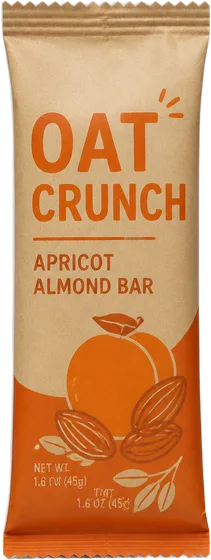
You baked the bars in your oven at home. People loved them. You posted about them, the comments went wild, and now you are staring at a spreadsheet trying to figure out how to turn a handwritten recipe into something a co-packer can actually run.
This is where most food founders hit their first real wall. The recipe is not the problem. The translation is.
Making something like this?
A co-packer does not want your recipe. They want a specification: every ingredient listed by its commercial name and supplier code, quantities expressed as percentages by weight, allergen declarations, a draft nutrition panel, processing instructions written for industrial equipment, and packaging callouts they can verify. Getting from your kitchen notes to that document used to mean hiring a food scientist, waiting weeks, and spending thousands before you had made a single unit for sale.
AI for food product development is changing that starting point. Not replacing the food scientist. Not skipping the testing. But compressing the distance between your idea and a document a professional can actually work from.
This post walks through what that process looks like in practice, what AI can genuinely do for a snack formulation, and where human expertise is still non-negotiable. This is general information, not legal or regulatory advice.
Why a Home Recipe Is Not a Co-Packer Spec
Before getting into the tools, it helps to understand why the gap exists at all.
When you bake a granola bar at home, you measure by cups and grams, you adjust by feel, and you know your oven runs hot. A co-packer is running a mixer that holds hundreds of kilograms, a depositor calibrated to a specific viscosity, and an oven with zones you have never touched. Your recipe has to survive that translation without becoming a different product.
The specific problems that come up:
Scaling changes the chemistry. A honey-bound bar that holds together in a batch of twenty may crumble at a batch of two thousand. The ratio of wet to dry ingredients, the temperature at which you cook the binder, and the moisture content of each ingredient all behave differently at scale.
Ingredient names are not universal. "Brown sugar" in your recipe could mean a dozen different commercial products with different moisture levels and particle sizes. A co-packer needs a specific ingredient, from a specific supplier, with a specification sheet attached.
Nutrition panels require lab data or verified ingredient databases. The nutrition facts on your label cannot be calculated from a home recipe alone. They need either lab testing or calculations built from validated ingredient data, and in many markets the label must meet a legal standard before you can sell the product.
Allergens have to be declared explicitly. Tree nuts, wheat, soy, dairy, eggs, and other major allergens need to be called out on the label and in your spec, and your co-packer needs to know them before they can assess whether their facility can run your product safely.
None of this is insurmountable. But it is why handing a co-packer your home recipe and asking for a quote usually goes nowhere.
What AI Food Formulation Actually Does
The honest answer is that AI does not make food. It does the translation work that used to require a specialist to even begin.
Here is what a good AI formulation tool can do for a bar, granola, cracker, or baked snack:
Convert your recipe to percentages by weight
Every professional food spec expresses ingredients as a percentage of the total batch weight, not as cups or tablespoons. This is called a baker's percentage or a formula percentage depending on the category. AI can take your home quantities, normalize them, and produce a formula expressed the way a co-packer and a food scientist expect to see it.
This sounds simple. It saves hours and eliminates a category of errors that derail early conversations with manufacturers.
Model ingredient costs per unit
Once your formula is in percentages by weight, AI can pull ingredient costs from a database and give you a rough cost-per-unit at different batch sizes. This is not a quote. It is a signal. It tells you whether your formula is in the right cost range for your target retail price before you spend anything on development.
A granola bar with a 40% almond content might taste extraordinary. It might also cost $4.20 to make at a 5,000-unit minimum, which makes a $6 retail price very difficult. Knowing that early changes the conversation.
Flag allergens automatically
A formula that contains oats, almonds, and soy lecithin carries at least three major allergen categories depending on the market. AI can read your ingredient list and surface those flags immediately, so you are not discovering them for the first time when a co-packer asks.
This does not replace a regulatory review. Allergen rules vary by country, labeling requirements change, and cross-contact risk at the manufacturing facility is a separate question entirely. But having the flags surfaced early means you walk into every subsequent conversation prepared.
Generate a draft nutrition panel from ingredient data
Using a validated ingredient database, AI can produce a draft nutrition panel showing calories, macronutrients, fiber, sugar, sodium, and other declared nutrients per serving. This is a starting point, not a finished label.
For a product going to retail, most markets require that your nutrition panel be verified by lab testing or by a calculation method that meets the regulator's standard. The draft panel from AI is valuable because it lets you see whether your product is nutritionally positioned the way you intended, and it gives a food scientist or a contract lab a head start. It is not the document you put on the box without further review.
Show you what changes when you scale
AI can model what happens to your formula when you move from a 10-kilogram test batch to a 500-kilogram production run. Moisture loss, binder behavior, and ingredient ratios that worked at small scale sometimes need adjustment at large scale. Seeing those flags before your first co-packer conversation means you can ask better questions and avoid surprises during the trial run.
The Journey from Idea to Spec
Here is how the process works in practice when you use Genie, the AI formulator for indie brands, to develop a food or snack product.
You start by describing your product. Not a formal brief. A real description: what the product is, what it tastes like, what it is made of, who it is for, and what you want it to do. Genie's AI works from that description to build a formula.
The formula comes back in percentages by weight. Every ingredient is listed with its percentage, its function in the formula, and the allergens it carries. You can see the full ingredient list and every percentage before you pay anything. Starting is free.
You can iterate. Want to swap oat flour for a gluten-free alternative? Want to reduce the sugar content? Want to see what happens to the cost if you replace a premium nut with a seed? You make those changes in conversation with the AI, and the formula updates.
When the formula is where you want it, a real chemist reviews it. This is how a product gets ready to make. A qualified food scientist reviews your formula and prepares the documents a co-packer needs, within 5 business days. Those manufacturing-ready documents are yours to take to any manufacturer. You get a refund if the review hasn't started or if the chemist cannot sign it off.
Then you find a co-packer. Asking manufacturers is free, up to three at a time. They do not see your formula unless they say yes. When one agrees to work with you, you move into sampling and then into a production run.
The whole journey, from pitch to manufacturing-ready documents, happens before you have spent what a single consulting session with a food scientist used to cost.
What AI Cannot Do (and Who Does It Instead)
Being clear about this matters, because the cost of getting it wrong in food is real.
A food scientist's review
AI can generate a formula. A qualified food scientist has to validate it. They check whether the formula will behave the way it is supposed to at scale, whether the processing instructions make sense for industrial equipment, and whether there are stability or safety issues that ingredient data alone would not surface. The chemist review built into Genie's process is exactly this step.
Shelf-life testing
No AI can tell you how long your granola bar stays fresh in a sealed pouch at ambient temperature. That requires real accelerated shelf-life testing, run by a lab, on actual samples made to your formula. This is a non-negotiable step before you go to retail, and it takes time. Build it into your timeline.
The co-packer's trial run
Even with a perfect spec, the first time a co-packer runs your product is a trial. Equipment behaves differently from facility to facility. Your co-packer will run a small batch, evaluate the output, and likely suggest adjustments before committing to a full run. That is normal. The spec you arrive with determines how many iterations that process takes.
Lab-tested nutrition when the label needs it
If your product is going to retail and your market requires lab-verified nutrition data, a draft panel from AI is not enough. You will need to send samples to a certified food lab for analysis. The AI draft gives you a strong starting point and helps you catch positioning problems early, but it does not replace the lab report.
Regulatory and legal compliance
Food labeling rules, ingredient approvals, and health claim regulations vary by country, by category, and by retail channel. Some retailers have their own standards that go beyond what regulators require. Check the current rules with the relevant regulator, your retailer's supplier portal, or a lawyer who works in food. The spec that Genie produces is a technical document. Whether it meets every requirement in your market is a question for those professionals.
A Note on Bars, Granola, Crackers, and Baked Snacks
These four categories share a formulation logic that makes them well-suited to AI-assisted development.
Bars (protein bars, energy bars, date-based bars) are typically binder-plus-inclusions systems. The binder, whether it is a syrup, a nut butter, or a cooked sugar base, determines texture and shelf life. The inclusions, oats, nuts, seeds, chocolate chips, dried fruit, determine flavor and nutrition positioning. AI can model the ratio of binder to inclusions, flag the allergens in each component, and show you the cost impact of swapping inclusions.
Granola is a baked loose format where oil content, sugar content, and bake time interact to produce clumping behavior. A granola that clusters well in a home oven can fall apart in a commercial rotary oven if the formula is not adjusted. AI can surface those flags and suggest adjustments before you get to a trial run.
Crackers are a laminated or sheeted dough product where hydration, fat content, and leavening interact to produce snap and shelf stability. The moisture content of the finished cracker determines whether it stays crisp in packaging. AI can model the formula and flag moisture-related risks.
Baked snacks (cookies, bites, puffs made from baked rather than extruded dough) share the hydration and fat dynamics of crackers with the inclusion complexity of bars. The cost modeling that AI provides is especially useful here, because premium inclusions like cacao nibs or sprouted seeds can move the cost-per-unit dramatically.
From Spec to Shelf: The Timeline You Should Expect
AI compresses the early part of this timeline significantly. It does not compress all of it.
- Formula development: Days instead of weeks, when you start with AI.
- Chemist review and manufacturing-ready documents: Up to 5 business days.
- Co-packer matching and quoting: Typically 2 to 6 weeks depending on the facility's capacity and your category.
- Sampling and iteration: 4 to 12 weeks, depending on how many rounds of adjustment the trial run requires.
- Shelf-life testing: 8 to 16 weeks for accelerated testing, longer for real-time validation.
- First production run: Varies by co-packer, typically 4 to 10 weeks from approved sample to finished goods.
From first formula to first sellable unit, a realistic minimum is 6 months. A year is common. AI does not change that reality. It changes how much of that time you spend stuck before you have a spec worth showing anyone.
Frequently Asked Questions
Can AI replace a food scientist for snack formulation?
No. AI can generate a formula, model costs, flag allergens, and produce a draft nutrition panel from ingredient data. A qualified food scientist has to review the formula before it goes to a co-packer, validate that it will behave correctly at scale, and sign off on the documents a manufacturer needs. The two work together; one does not replace the other.
How accurate is a draft nutrition panel from AI?
A draft nutrition panel generated from a validated ingredient database is a useful starting point and a strong signal for positioning. It is not a finished label. Most retail markets require that your nutrition panel be verified by lab testing or a calculation method that meets the regulator's standard. Use the AI draft to catch problems early, then confirm with a lab or a registered dietitian before printing labels.
What does a co-packer actually need from me before they will quote?
At minimum: a formula expressed as percentages by weight with commercial ingredient names, an allergen declaration, a draft nutrition panel, processing instructions, and target packaging format. Some co-packers will also want a shelf-life target and a minimum order quantity before they will engage. The manufacturing-ready documents that come out of Genie's chemist review are built to meet these requirements.
How much does it cost to develop a food product with AI?
Starting on Genie is free. You can build your formula end to end, see every ingredient and every percentage, and model costs before you pay anything. The chemist review and manufacturing-ready documents are a paid step; see Genie's pricing for current rates. After that, you pay your co-packer's and suppliers' prices through Genie, plus a small payment fee, and you see every price before you pay it.
Does AI handle regulatory compliance for food products?
AI can flag the allergens your formula carries and surface general formulation considerations. It does not provide legal or regulatory advice, and it does not guarantee that your product meets the labeling or ingredient rules in your market. Those rules vary by country, by category, and by retail channel. Check the current requirements with the relevant regulator, your retailer, or a lawyer who works in food.
What food and snack categories can Genie formulate?
Genie covers non-alcoholic beverages, alcoholic beverages, supplements, food and snacks, and sauces and condiments, alongside beauty, personal care, and home categories. Within food and snacks, bars, granola, crackers, and baked snacks are all supported. You describe the product; the AI builds the formula from a 180,000-row ingredient database with chemistry and cost data.
Key Takeaways
- A home recipe and a co-packer spec are different documents. The translation between them is where most early food founders get stuck.
- AI food formulation converts your recipe to percentages by weight, models ingredient costs, flags allergens, and generates a draft nutrition panel from ingredient data. It does not replace shelf-life testing, a food scientist's review, or lab-verified nutrition data.
- The manufacturing-ready documents that come out of a chemist review are what a co-packer actually needs to quote and run your product.
- Bars, granola, crackers, and baked snacks share a formulation logic that maps well to AI-assisted development, especially for cost modeling and allergen flagging.
- The realistic timeline from first formula to first sellable unit is 6 to 12 months. AI compresses the early part of that timeline, not all of it.
- This post is general information, not legal or regulatory advice. Check current rules with the relevant regulator, your retailer, or a qualified professional.